
Vera Hartmann · 1 October 2026
Investigating Buoyancy-Driven Flows in Modern Content Delivery Networks
Buoyancy-driven flows occur when density differences in fluids create natural movement through gravity, and researchers have begun applying these principles to analyze traffic patterns inside content delivery networks where data packets behave like buoyant elements under varying load conditions. Observers note that engineers model server clusters as fluid reservoirs where hotter, less dense traffic rises while cooler streams sink toward lower layers, creating circulation loops that affect latency and throughput across edge locations worldwide.
Core Principles Behind the Investigation
Studies in fluid dynamics have long established that temperature gradients drive convection currents, yet network scientists adapt the same equations to packet routing where processing heat at one node influences neighboring cache performance. Data from monitoring systems reveals that buoyancy effects become pronounced during peak hours when regional demand spikes cause localized density variations in request queues, prompting algorithms to reroute content through alternate paths that mimic upward thermal plumes. Researchers at multiple institutions track these movements using sensor arrays placed throughout data centers, measuring variables such as queue depth alongside ambient temperature to map how buoyant forces redistribute load without active intervention from central controllers.
Methods Used in Current Research
Teams deploy simulation software that combines computational fluid dynamics with network topology models, allowing them to test how changes in one region propagate through the entire delivery mesh. Experiments conducted through 2025 and into October 2026 incorporated real-time telemetry from commercial CDNs operating across North America and Europe, where analysts compared predicted flow paths against observed delivery times to refine buoyancy coefficients embedded in their code. Canadian research groups working with industry partners have published datasets showing that networks incorporating buoyancy-aware routing reduced average hop counts by measurable margins during sustained high-traffic events, while Australian university laboratories contributed comparative studies focused on undersea cable segments where temperature differentials along the route alter effective packet buoyancy.
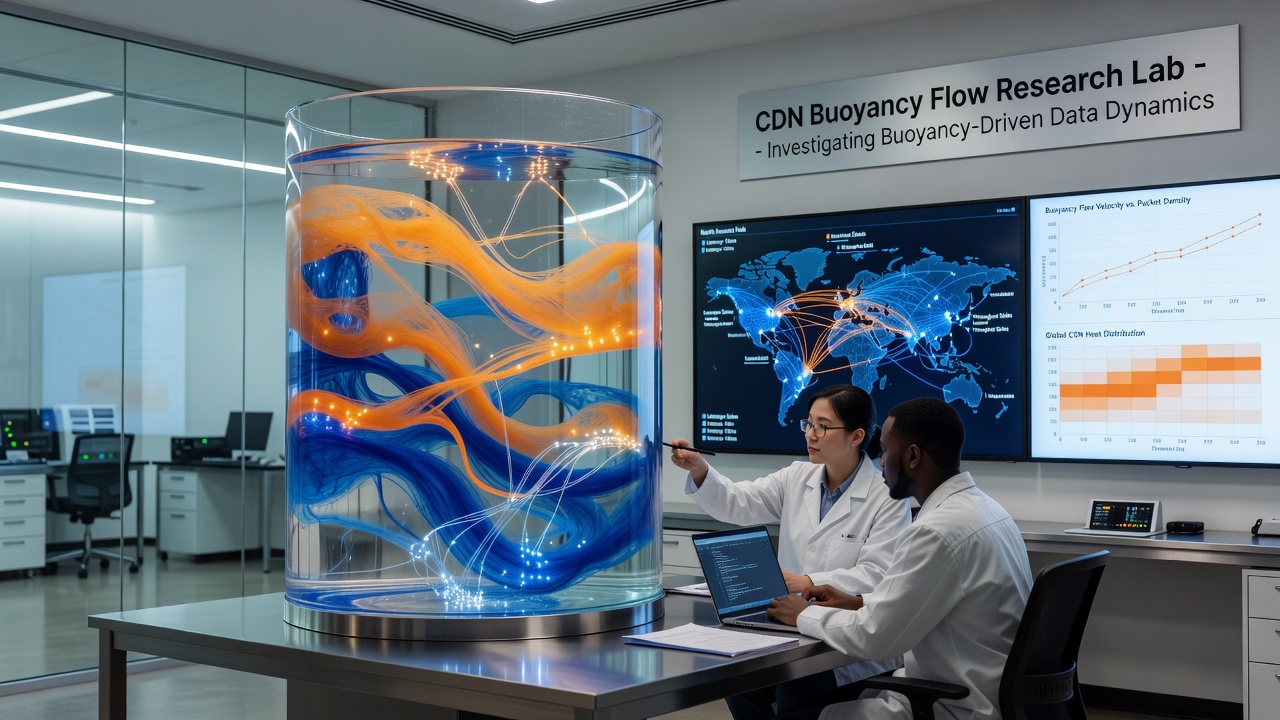
Instrumentation includes infrared cameras pointed at server racks alongside high-resolution network probes that log packet timestamps at microsecond intervals, creating synchronized records that reveal when buoyant displacement begins to dominate over scheduled load balancing. Those who have examined the combined datasets find recurring patterns where morning traffic surges in one timezone create downward pressure that displaces evening content requests in distant regions, generating self-organizing loops that operators previously attributed to random fluctuations.
Geographic and Seasonal Variations Observed
Evidence collected from deployments spanning multiple continents indicates that latitude affects the strength of buoyancy-driven phenomena because ambient cooling capacity varies with climate, altering the baseline density contrast between active and idle network segments. In October 2026 several European research consortia released findings drawn from Scandinavian and Mediterranean testbeds that demonstrated stronger vertical flow components in cooler northern facilities compared with southern sites where higher external temperatures compress the buoyancy range. North American operators contributed parallel observations from desert-edge data centers where rapid diurnal temperature swings produced pronounced daily cycles in traffic circulation that standard routing tables failed to anticipate.
Academic papers available through institutional repositories detail how researchers integrate buoyancy parameters into existing anycast and BGP optimization frameworks, yielding hybrid systems that respond to both topological distance and thermal-fluid analogs. One study coordinated across institutions in Canada and the European Union tracked a series of controlled overload events and documented how buoyancy corrections prevented cascade delays that had occurred in prior baseline tests without the added modeling layer.
Implications for Network Architecture
Designers now evaluate rack layouts and cooling configurations not only for thermal efficiency but also for their influence on modeled packet buoyancy, adjusting airflow baffles and server placement to steer natural circulation toward desired traffic corridors. Industry reports from research organizations indicate that such integrated approaches have produced measurable improvements in cache hit ratios during stress periods, as buoyant pathways preferentially deliver frequently requested objects along rising flow lines. Observers tracking deployments note that the technique scales across both large hyperscale networks and smaller regional providers because the underlying fluid equations remain consistent regardless of absolute size.
Conclusion
Investigations into buoyancy-driven flows continue to generate new data streams that refine how modern content delivery networks handle variable demand, with ongoing work in October 2026 expanding the geographic scope of measurements and tightening integration between fluid models and routing logic. The accumulated evidence shows consistent correlations between density-driven circulation and delivery performance metrics, providing operators with additional levers for maintaining stability across expanding global infrastructures.