Zara Vogel · 17 September 2026
Seasonal Draft Cycles and Their Effects on Sustaining Virtual Network Endurance Across Changing Conditions
Seasonal draft cycles refer to recurring patterns of air movement and temperature variation that occur throughout the year and influence the physical infrastructure supporting virtual networks. These cycles arise from natural environmental shifts combined with operational demands on facilities such as data centers and edge computing nodes. Researchers at institutions tracking infrastructure performance note that these patterns directly affect cooling efficiency, power distribution stability, and overall system resilience during periods of fluctuating external conditions.
Understanding Draft Cycle Mechanics in Network Facilities
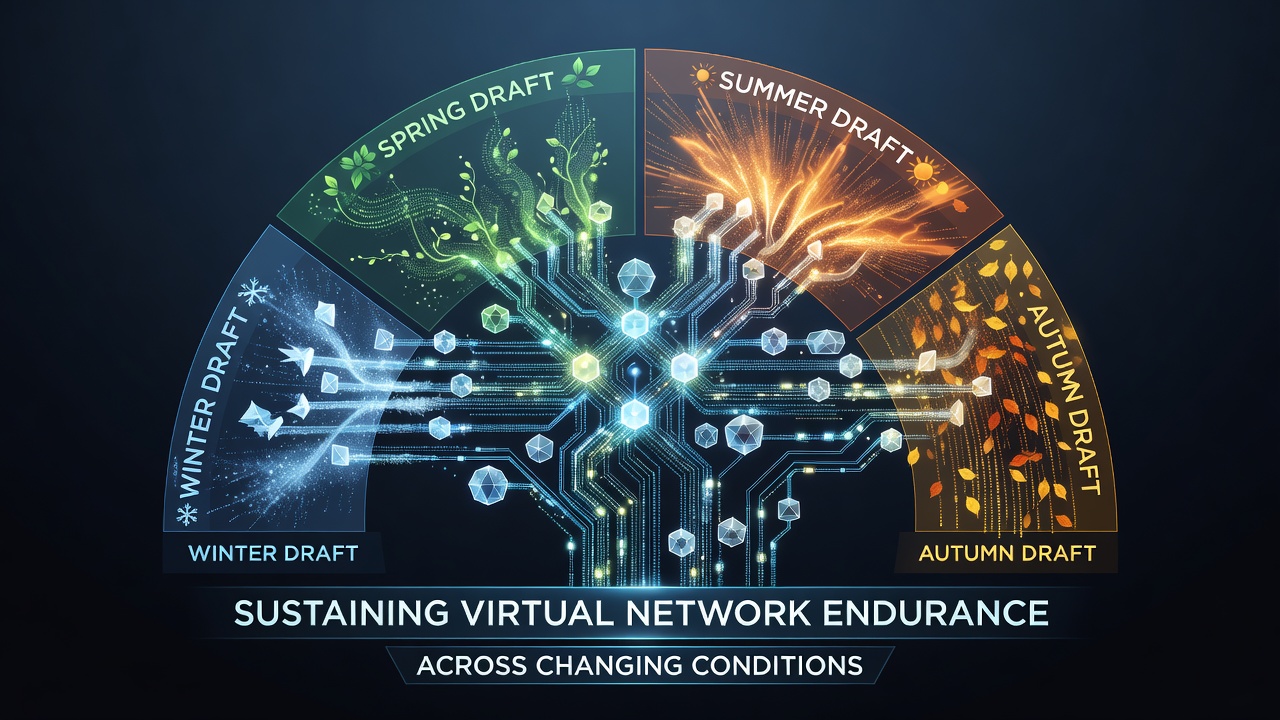
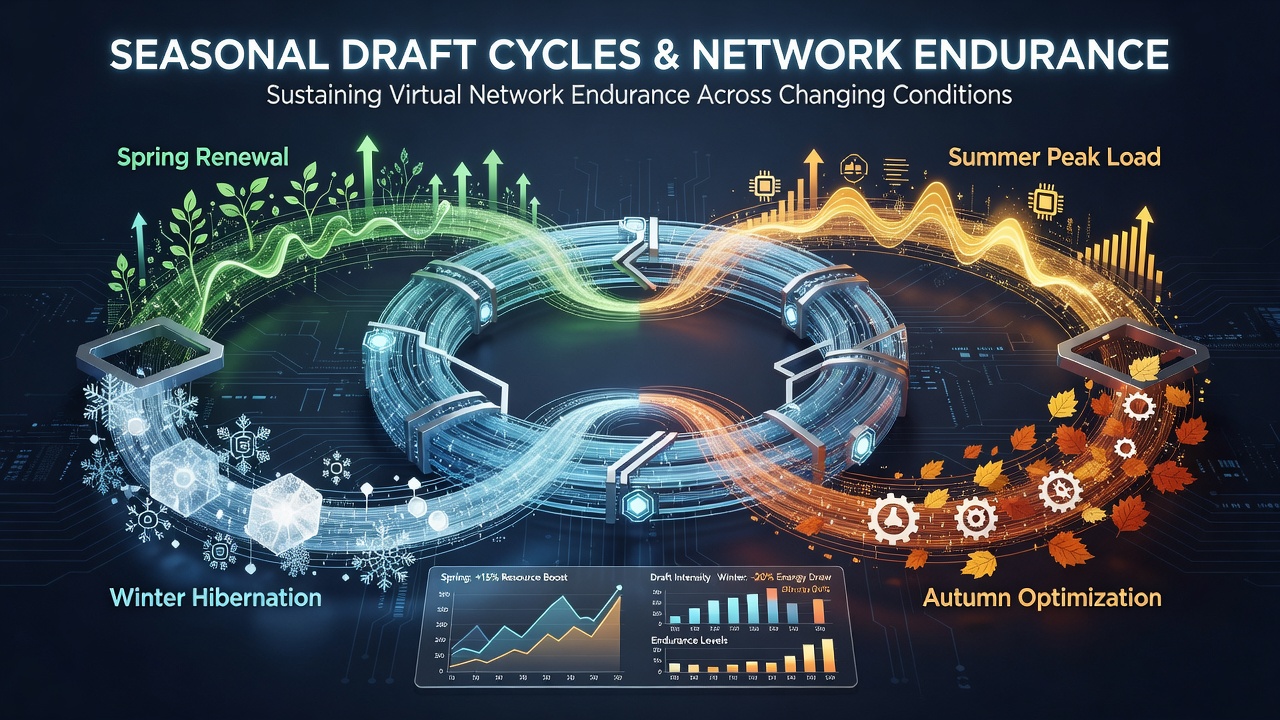
Data centers maintain controlled environments where air flow patterns shift with external seasons, creating predictable draft cycles that operators monitor through sensor arrays and predictive modeling tools. In winter months colder ambient air enters intake systems more readily, reducing the load on mechanical chillers while increasing risks of condensation on sensitive components, whereas summer conditions reverse this dynamic by elevating intake temperatures and forcing greater reliance on evaporative cooling towers. Observers note that spring and autumn transitions introduce additional variability as humidity levels fluctuate rapidly, requiring dynamic adjustments to variable frequency drives on fans and dampers to maintain consistent internal pressures. According to reports from the National Institute of Standards and Technology, these seasonal adjustments influence latency metrics and packet loss rates when thermal management falls out of synchronization with network load spikes.
Impact on Endurance During Variable Conditions
Virtual network endurance depends on the continuous operation of underlying hardware, and seasonal draft cycles test this continuity by altering thermal loads across server racks and switching equipment. When draft patterns strengthen in transitional seasons, operators record measurable improvements in energy efficiency because natural air movement supplements mechanical systems, yet the same patterns can introduce micro-variations in component temperatures that accelerate wear on capacitors and processors if left unaddressed. Studies conducted by European research consortia indicate that networks operating in regions with pronounced seasonal extremes experience up to 18 percent greater variance in uptime during peak draft periods compared to facilities in more temperate zones. These variations become particularly evident when sudden weather events coincide with scheduled maintenance windows, forcing rapid reconfiguration of load balancing algorithms to prevent localized overheating.
September 2026 Projections and Observed Trends
Industry forecasts for September 2026 highlight expected increases in draft cycle intensity across mid-latitude regions due to documented shifts in atmospheric circulation patterns, prompting network operators to implement enhanced predictive controls ahead of anticipated demand surges from educational and enterprise workloads. Data from monitoring platforms shows that facilities incorporating machine learning models for draft prediction achieved steadier endurance metrics during similar periods in prior years, maintaining sub-2-millisecond latency even as external temperatures rose above seasonal averages. Those who manage large-scale virtualized environments report that preemptive calibration of airflow dampers in late summer reduces the frequency of thermal throttling events once autumn drafts begin to dominate.
Adaptation Strategies Employed by Operators
Network operators address seasonal draft effects through layered approaches that combine hardware modifications with software-driven optimizations. Adjustable containment systems allow facilities to redirect stronger natural drafts toward high-density compute zones during cooler months, while redundant cooling loops engage automatically when summer conditions diminish draft effectiveness. Research from Australian academic centers demonstrates that integrating real-time environmental telemetry with orchestration platforms enables virtual network functions to migrate across availability zones before draft-induced thermal stress reaches critical thresholds. These migrations occur seamlessly because modern hypervisors maintain state synchronization across geographically dispersed nodes, preserving session continuity even during pronounced seasonal transitions.
Power management protocols also adapt to draft cycles by modulating voltage and frequency scaling on processors in alignment with anticipated cooling capacity. When draft strength increases, facilities can safely raise operating frequencies on non-critical workloads without exceeding thermal envelopes, thereby improving throughput without additional energy expenditure. Figures from infrastructure audits reveal that such synchronized adjustments contribute to measurable reductions in annual carbon output for large-scale virtual network deployments, particularly in locations where seasonal extremes create pronounced draft differentials between day and night cycles.
Case Examples from Diverse Regions
One facility in northern Canada adjusted its intake louver sequencing in response to extended winter draft periods and recorded sustained endurance improvements across its virtualized storage clusters throughout subsequent seasonal changes. Similarly, operators in southern Australia implemented humidity-triggered bypass modes that activate during transitional autumn drafts, preventing moisture-related packet errors that previously appeared in monitoring logs. These examples illustrate how localized responses to draft cycles produce cumulative benefits when aggregated across global network fabrics, supporting consistent performance for distributed applications regardless of geographic location.
Conclusion
Seasonal draft cycles represent a persistent variable that shapes the endurance profile of virtual networks through their influence on thermal and power management systems. Data collected across multiple facilities demonstrates that proactive monitoring and adaptive controls allow operators to convert these natural patterns into operational advantages while mitigating associated risks. Continued refinement of predictive models and integration of regional climate data will further strengthen network resilience as draft cycles evolve in response to broader environmental shifts.